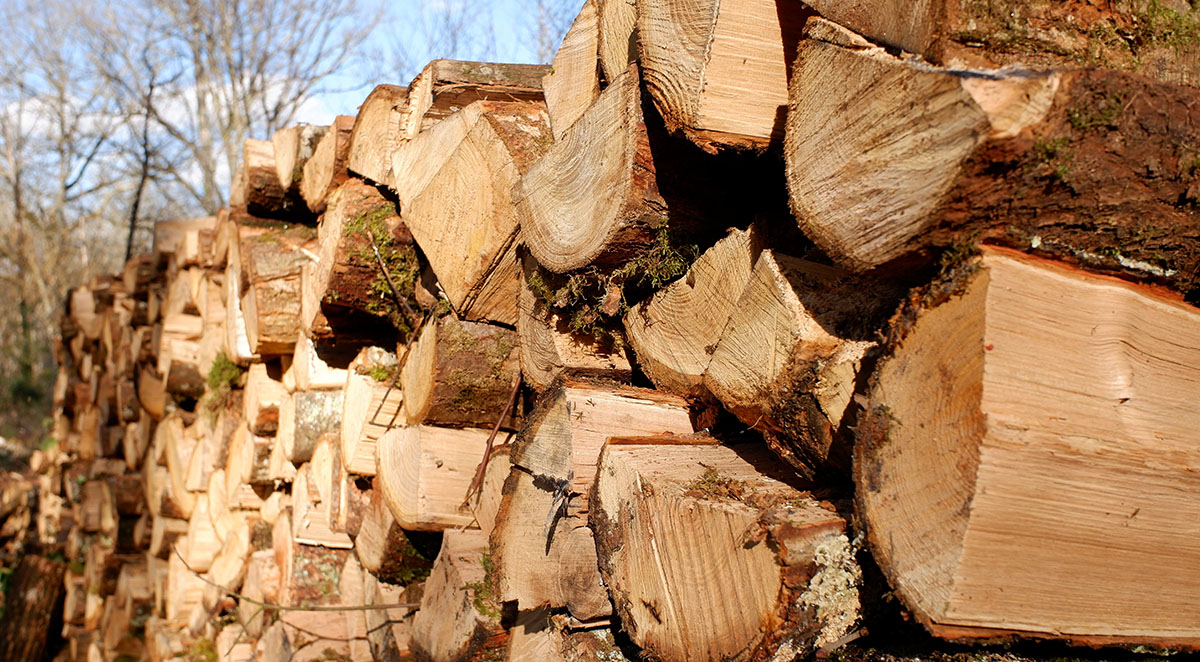
You light the fire, and it hisses. The logs smoke and the room never really warms up. The stove and the chimney may be fine. The wood may be the problem. It looked dry on the outside, but there was still too much water inside it.
At Appalachian Chimney Service in Clyde, our highly trained technicians clean, inspect and repair chimneys across Western North Carolina, and wet firewood can leave heavy deposits in a flue. This post explains what seasoned firewood is, how to check it, which local woods burn best, and what wet wood does to your chimney.
Quick Summary
- Seasoned firewood is wood that has been split and dried until its moisture content is below 20 percent.
- A moisture meter on the inside face of a freshly split piece is the only sure test. Look, sound and weight are good clues, not proof.
- Dense hardwoods like hickory and oak give the most heat, but they also take the longest to dry. Plan on a year or more.
- Stack wood off the ground, split, in the sun and wind, with only the top covered.
- Wet wood makes a cool, smoky fire, and that smoke leaves creosote in the flue.
- Burn local wood. Moving firewood spreads pests like the emerald ash borer.
What Seasoned Firewood Means
A living tree is full of water, and it leaves slowly after you cut it. Seasoned firewood is wood that has been split and left to air-dry until most of that water is gone.
The U.S. Environmental Protection Agency's wood-burning guidance gives the target in plain terms. Wood burns best at a moisture content of less than 20 percent, and it should be seasoned for at least six months. You can read it on the EPA's best wood-burning practices page.
Six months is the floor. Dense hardwoods often need much longer.
Why water matters in a fire
A fire has to boil the water out of a log before the wood itself can burn well. Heat spent on that water never reaches your room. Wet wood also burns cooler and makes more smoke. That smoke is unburned fuel, and it is what coats the inside of your chimney.
Green, seasoned and kiln-dried
- Green wood is freshly cut. It holds the most water.
- Seasoned wood has air-dried to below 20 percent moisture.
- Kiln-dried wood has been dried with heat in a kiln. It is ready sooner, but check it with a meter too.
Moisture Content and How to Check It
You can't judge moisture from the outside of a log. The outer layers dry first, and moisture leaves the center last.
Use a moisture meter the right way
A moisture meter is an inexpensive tool, sold at most home stores and woodstove retailers. The University of Maryland Extension tested firewood drying in the Piedmont and Blue Ridge region of Western Maryland. Its fact sheet on measuring wood moisture gives the method:
- Split a piece open.
- Push the meter pins into the fresh face in the middle of the piece.
- Read the number. Close to 20 percent or below means it is ready. A bit higher may dry out with a few more months of stacked, covered storage.
If you buy firewood, the same fact sheet suggests you split a piece and test it before the load comes off the truck. Wood reading over 30 percent is not seasoned, whatever the seller calls it.
What the Maryland study found
The results are worth knowing for the mountains:
- Hickory rounds left unsplit and uncovered were still over 30 percent moisture after a full year.
- Split black cherry and hackberry were ready to burn after about seven months.
- Split hickory still averaged about 24 percent after one year.
- Black locust averaged acceptable moisture by the end, but the inside was still near 26 percent after a year.
The study wood was cut in April, when sap is high, and left uncovered, so it is a slow case. Still, the lesson is clear. Dense wood needs more than one summer, and unsplit rounds barely dry at all.
Signs by Eye, Sound and Weight
No meter on hand? The EPA lists three signs of well-seasoned wood. It is darker in color. It weighs less. It sounds hollow when you knock two pieces together.
The University of Maryland adds one more clue. Dry wood shows cracks, called checking, across the cut ends.
When the signs fool you
These signs show you the outside of the log. A piece of locust or hickory can look dry at the ends and still be wet in the center. Use the signs to sort your pile, then confirm with a meter.
The Best Firewood to Burn in Western NC
The best firewood is dense hardwood that is fully dry. Density decides how much heat you get from a stack. Dryness decides whether you get that heat at all.
The University of Missouri Extension's wood fuel guide rates common species. Here is how the woods you will see in local firewood compare:
- Hickory: high heat. The guide calls it the hottest-burning common hardwood. Hard to split and slow to dry.
- Red oak and white oak: high heat, rated excellent. Oak is dense, so give it extra drying time.
- Hard maple: high heat, rated excellent.
- Ash: high heat, easy to split, rated excellent.
- Soft maple: medium heat, rated good.
- Cherry: medium heat, rated good. It dries faster than the heavy woods.
- Black locust: very dense. In the Maryland study the middle of the wood was still wet after a year, so test the middle before you burn it.
Softwoods
Pine is not bad fuel. Pound for pound, the Missouri guide says resinous softwood gives about the same heat as hardwood, or slightly more. It rates southern yellow pine high for heat and easy to burn. It also warns that high sap in pine may lead to creosote build-up. So burn pine only when it is dry, and keep your chimney on a regular inspection schedule.
A word on ash and the emerald ash borer
The emerald ash borer is an insect that kills ash trees. NC State Extension reports it was first found in North Carolina in 2013 and is now common across much of the state.
Ash still makes good firewood. The Missouri guide rates it high for heat and excellent overall. Season it and check it with a meter like any other wood. And burn it close to home. NC State Extension recommends you burn untreated firewood within 50 miles of where it was cut, so you don't carry the insect, or other pests, to new trees.
How to Stack and Store Firewood
Good stacking can save you months of drying time. The EPA and the University of Maryland agree on the basics.
Split it early
Split wood dries much faster than rounds, because more of the wood is open to the air. Split it soon after you cut it.
Get it off the ground
Stack on pallets, rails or a rack. Wood that sits on the dirt can take in moisture from the ground.
Cover the top, leave the sides open
Cover only the top of the stack. The EPA warns that covering the sides traps moisture in. A tarp wrapped tight around a pile keeps it damp. A simple woodshed with open sides works best.
Pick a sunny, breezy spot
A stack in full sun and wind dries faster than one in the shade behind the house.
Cut a year ahead
The Maryland fact sheet suggests you cut trees in late summer, fall or winter, when less sap is in the wood. Ideally, cut wood at least one full year before you plan to burn it. The sheet also notes that drying takes longer in humid climates, so dense hardwood may need extra time here.
What Wet Wood Does to a Chimney
This is where firewood becomes a chimney problem. Wet wood burns cool and smoky, and the smoke carries tar-like vapors up the flue. When those vapors touch the cooler flue walls, they condense and stick. That deposit is creosote, and creosote burns. Our post on understanding creosote in your chimney explains the stages and why the glazed kind is the most dangerous.
Signs your wood is hurting your chimney
- Heavy smoke from the chimney top after the fire is going.
- A dark, sooty film on the stove glass.
- A strong, smoky smell in the room.
- Black, flaky or shiny deposits in the damper area.
Dry wood, hot fires, yearly inspection
The EPA says to build hot fires and not to let them smolder, because for most appliances a smoldering fire is neither safe nor efficient. Dry wood makes that possible.
Dry wood lowers the risk, but it does not remove it. NFPA 211, the national standard for chimneys and fireplaces, calls for chimneys to be inspected at least once a year and cleaned when needed. If you burned wet wood last winter, schedule your chimney cleaning and inspection before you light this year's first fire. You can request a visit on our contact page or call (828) 400-8731.
For more on running a fireplace well, from building the fire to daily care, see our complete guide to wood-burning fireplaces.
Frequently Asked Questions
What is seasoned firewood?
Seasoned firewood is wood that has been split and air-dried until its moisture content is below 20 percent. The EPA says wood should season for at least six months. Dense hardwoods like oak and hickory often need a year or more.
What is the best firewood to burn?
Dense, fully dry hardwood. Hickory, oak, hard maple and ash all rate high for heat. But dryness comes first.
How long does firewood take to season in Western North Carolina?
Plan on about seven months or more for lighter woods like cherry, and a year or more for dense hardwoods like oak and hickory. Locust can read dry at the ends and still be wet inside. Humid weather slows drying. A meter reading tells you when it is ready, not the calendar.
Can I burn pine in my fireplace or wood stove?
Yes, if it is dry. The Missouri guide rates southern yellow pine high for heat but warns that its sap may add to creosote build-up. Dry pine is a better choice than wet oak. Have your flue checked on a regular schedule.
Can I burn ash killed by the emerald ash borer?
Yes. Ash rates high for heat. Season and test it like any other wood. Burn it near where it was cut, within 50 miles, so you don't spread the insect.
Does a tarp over my woodpile help?
Only over the top. Rain on the top of the stack slows drying, but a tarp wrapped around the sides traps moisture. Leave the sides open to the air.
How often should I have my chimney cleaned if I burn wood?
NFPA 211 calls for an inspection at least once a year, with cleaning when deposits are found. If you burn a lot of wood, or your wood was wet, you may need cleaning more often. A technician can tell you after looking at your flue.
Get Your Chimney Ready for Burning Season
Good, dry firewood is the first step to a safe fire. A clean, sound chimney is the second. Our highly trained technicians serve homes across Western North Carolina. We call before we arrive, and we email your paperwork and photos after every job. Call (828) 400-8731, Monday to Friday, 8 am to 4:30 pm, or contact us for an estimate.