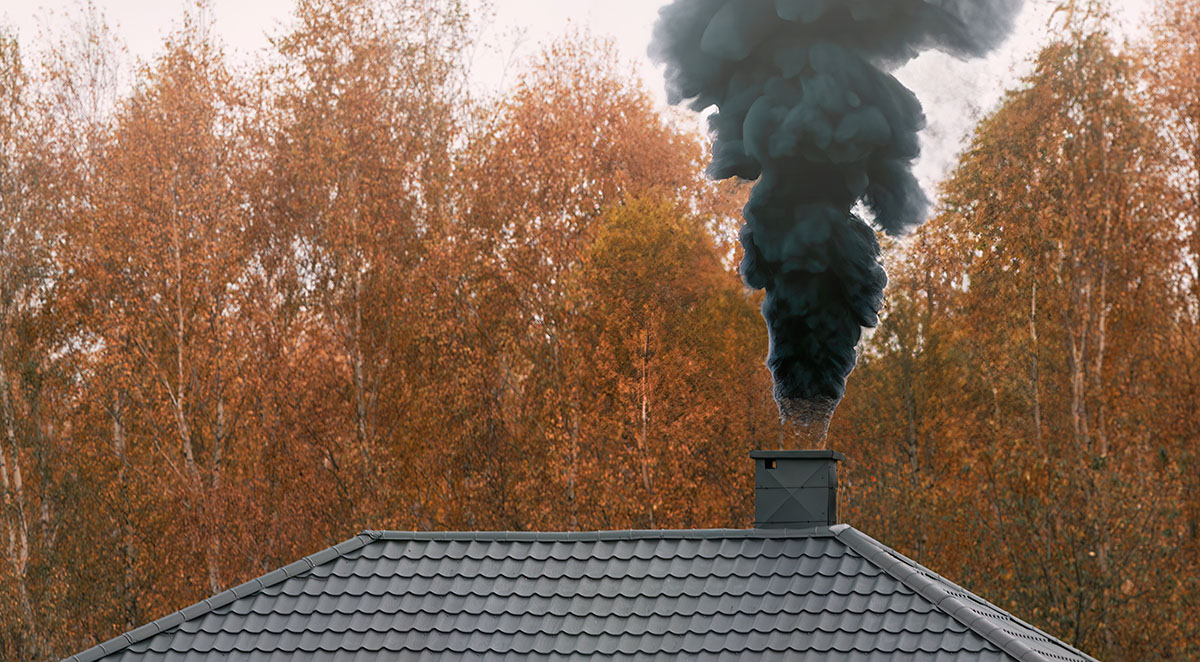
You light the first fire of the season, and within a minute smoke is rolling out of the fireplace and drifting across the ceiling. Chimney smoke that comes back into the room is one of the most common problems we see each fall, and it almost always has a cause you can find and fix.
Appalachian Chimney Service is a chimney and hearth company in Clyde, NC, serving homeowners across Western North Carolina. This post explains what stops a chimney from drawing, and which fixes you can make yourself.
Quick Summary
- A chimney works because hot gas is lighter than cold air. Anything that weakens that rising column, or blocks its path, can push smoke back into the room.
- The most common causes are a cold flue, a closed damper, a blocked flue or cap, wet firewood, and heavy creosote.
- Tight homes and exhaust fans can pull air down the chimney, even when the chimney itself is fine.
- A flue that is the wrong size, or a chimney that is too short for the roof, causes smoke problems that no burning habit can fix.
- Smoke in the house can carry carbon monoxide, so treat repeated smoke spillage as a safety problem, not a nuisance.
Why a Chimney Smokes Into the Room
A chimney is a simple machine. The fire heats the gas above it. Hot gas is lighter than the cooler air around it, so it rises up the flue and out the top. As it rises, it pulls fresh air into the firebox to feed the fire. This pull is called draft.
Draft depends on two things: how much warmer the gas in the flue is than the air outside, and how tall that column of warm gas is. A taller, warmer column pulls harder. A short, cold one pulls weakly.
When draft is strong, smoke has one way to go, which is up. When draft is weak, or when something in the house pulls harder than the chimney does, smoke takes the easiest path. That path is often out the front of the fireplace and into your living room.
Draft and Flue Problems
Many smoke problems start in the flue itself. These are common causes in Western North Carolina homes.
A cold flue
On a cold morning, the flue is full of heavy, cold air that wants to sink into the room the moment you open the damper. A full load of wood lit into a cold flue often gives a burst of smoke before the draft gets going.
Warm the flue first. Hold a rolled-up sheet of lit newspaper near the open damper for a few seconds. When the smoke from the paper rises into the flue, the draft has turned upward. Then start with a small, hot kindling fire and add larger pieces once it burns well.
A closed or stuck damper
It sounds too simple, but a damper that is closed or only partly open is one of the top causes of smoke in the room. Dampers rust and stick, and the handle can show "open" while the plate stays partly closed. Look up into the throat with a flashlight before you light a fire. A damper that will not open all the way or will not seal when closed should be repaired or replaced.
A blocked flue or chimney cap
Anything that narrows the flue cuts draft. Common blockages include nests and fallen flue tile. A cap screen can also clog with soot until smoke cannot get out fast enough. A full blockage is a serious hazard. Smoke and carbon monoxide have nowhere to go but into the house.
A chimney that is too short
Height matters for draft, and the code sets a minimum. The International Residential Code requires a masonry chimney to extend at least 3 feet above the highest point where it passes through the roof, and at least 2 feet higher than any part of the building within 10 feet. This is the 3-2-10 rule. The taller of the two measurements sets the minimum. North Carolina's residential code is built on the IRC and carries the same rule (see the chimney and fireplace chapter of the 2018 North Carolina Residential Code). Factory-built and metal chimneys follow their listing and the manufacturer's instructions.
When a chimney sits low on a steep roof, or near a taller roof section, wind over the higher roof can push air down the flue. Homes on ridges and slopes can see this, and the smoke may show up only when the wind comes from one direction. Raising the chimney or adding the right cap may solve it, but only after someone measures what is there.
Fuel Problems: Wet Wood and Creosote
What you burn affects how well the chimney can move smoke.
Wet or unseasoned firewood
Freshly cut wood is full of water. The fire spends much of its energy boiling that water off, which gives a cooler fire and weaker draft. The EPA's Burn Wise guidance says wood burns best at a moisture content of less than 20 percent and recommends testing it with a moisture meter before you burn it (EPA best wood-burning practices). The same guidance notes that a correctly installed and correctly used appliance should make very little smoke.
Well-seasoned wood is usually lighter in weight and sounds hollow when you knock two pieces together. Wood that hisses or is hard to keep lit is too wet. Burn only dry, split firewood, never trash or treated lumber. For more on fuel and burning habits, see our complete guide to wood-burning fireplaces.
Creosote buildup
Creosote is the tar-like residue left when smoke cools on the inside of the flue. Wet wood and smoldering fires make more of it. Heavy creosote narrows the flue, which cuts draft, and it gives off a strong smoky smell when air flows down the chimney. That is why some homes smell like smoke on humid days with no fire burning. Creosote is also the fuel for chimney fires. Our post on understanding creosote and the danger it poses in your chimney explains the stages of buildup and how cleaning removes it.
House Pressure and Tight Homes
Sometimes the chimney is fine and the house is the problem. A fire pulls air from the room, and the chimney sends that air outside. If the house cannot supply enough air, it may start pulling air back down the chimney instead.
Exhaust fans and other air-moving equipment
Range hoods, bathroom fans, and clothes dryers all push air out of the house and lower the pressure inside. A large exhaust fan can overpower a fireplace in a tight house. If your smoke problem shows up mainly while you cook or after someone runs a bath fan, this is a likely cause. Turn these off while the fire burns and see if the problem stops.
Stack effect and tight construction
Warm air rises inside a house just as it does in a chimney. In a two-story home, warm air leaks out near the top, and the lower floors pull air in to replace it. A fireplace on the lowest floor can become that air inlet, with the chimney working in reverse. Tight windows and sealed walls in newer or remodeled homes make this worse.
The North Carolina residential code requires factory-built and masonry fireplaces to have an exterior air supply unless the room is mechanically ventilated so the indoor pressure is neutral or positive. A quick test is to crack a window near the fireplace about an inch while the fire burns. If the smoke stops, the house is short on air. The lasting fix may be an outside air kit or a ventilation change.
Appliance and Liner Problems
Some smoke problems come from how the system was built. Better burning habits will not fix these.
Wrong flue size
The flue has to match what it serves. A flue that is too small cannot carry all the smoke from a large fireplace opening. A flue that is too large for a wood stove or insert lets the gas cool and slow down, which weakens draft and builds creosote fast.
For masonry fireplaces, the International Residential Code sets a minimum flue area based on the size of the fireplace opening. A round flue must be at least one-twelfth of the opening's area, and a square flue at least one-tenth. Other shapes follow other ratios. Stoves and inserts follow the manufacturer's installation instructions. One common mismatch is an insert vented into an oversized masonry flue with no liner. A properly sized stainless steel liner is often the answer.
Damaged or missing liner
The flue liner keeps heat and gases inside a smooth, sealed path. Cracked tiles and open joints let gas cool and leak, and they leave rough spots where creosote collects. A damaged liner can also let smoke and carbon monoxide seep into walls or other rooms. This damage is often invisible from the firebox and needs a camera scan to find.
What to Check Yourself and What Needs a Technician
You do not need to climb on the roof to rule out the simple causes.
Checks you can do
- Damper: Use a flashlight to confirm it is fully open before every fire.
- Firewood: Split a piece and test the fresh face with a moisture meter, or check its weight and sound.
- Fans: Turn off range hoods and bath fans while the fire burns.
- Air supply: Crack a nearby window an inch and watch whether the smoke changes.
- Startup: Warm the flue first and build a small, hot fire instead of a large smoldering one.
- Cap: From the ground, look for a missing cap or a bent screen.
If the smoke stops after one of these changes, you have likely found the cause. An open window is a clue, though, not a permanent repair.
When to call a professional
Call for an inspection if smoke keeps coming back after these checks or if tile pieces fall into the firebox. If your carbon monoxide alarm sounds, get everyone outside and call 911 first. NFPA 211, the national standard for chimneys, fireplaces, and vents, calls for chimneys to be inspected at least once a year and cleaned and repaired when needed.
Our highly trained technicians use NFPA 211 as the guide for inspections. Our chimney cleaning and inspection service covers all three NFPA 211 inspection levels, and Level 2 includes video scanning of the flue liner, so we can find liner cracks and blockages you cannot see from below. When we find a problem with the damper or liner, our chimney repair and restoration team handles it, including relining and custom caps from our own metal shop. We call when we are on the way, and we email your paperwork and photos after the job.
If you are in Haywood, Buncombe, Jackson, or Henderson County, request an inspection or an estimate through our contact page or call (828) 400-8731.
Frequently Asked Questions
Why does my fireplace smoke only when I first light it?
That is almost always a cold flue. Cold, heavy air in the chimney sinks into the room until the flue warms up. Warm the flue with a lit roll of newspaper held near the open damper, then start with a small, hot kindling fire.
Why does my house smell like smoke when the fireplace is not in use?
Air is likely flowing down the chimney and carrying the odor of creosote into the room. This often happens on humid days or when exhaust fans run. A cleaning removes the source of the smell, and a damper that seals well can stop the downflow.
Can a chimney cap cause smoke problems?
Yes. A cap screen clogged with soot or creosote can restrict the flue enough to push smoke back into the room. A cap that fits the flue and is kept clean should not cause trouble.
Is smoke coming into the room dangerous?
It can be. Wood smoke contains fine particles and carbon monoxide, and carbon monoxide cannot be seen or smelled. Repeated smoke spillage means combustion gases are getting into your living space. Keep working carbon monoxide alarms in the home and have the chimney inspected.
How often should I have my chimney inspected?
NFPA 211 calls for chimneys, fireplaces, and vents to be inspected at least once a year. That holds even if you burn only a few fires a season, because animals and weather cause problems whether or not you use the fireplace.
Get Your Chimney Drawing Right Again
A smoking fireplace is your chimney telling you something is off. Sometimes the fix is drier wood or an open damper. Other times it takes a new liner or a taller chimney. Either way, know the cause before you pay for a fix. Call Appalachian Chimney Service at (828) 400-8731, Monday to Friday, 8 am to 4:30 pm, or contact us online to schedule a chimney inspection. We will find out why your chimney smokes and explain your options in plain terms.