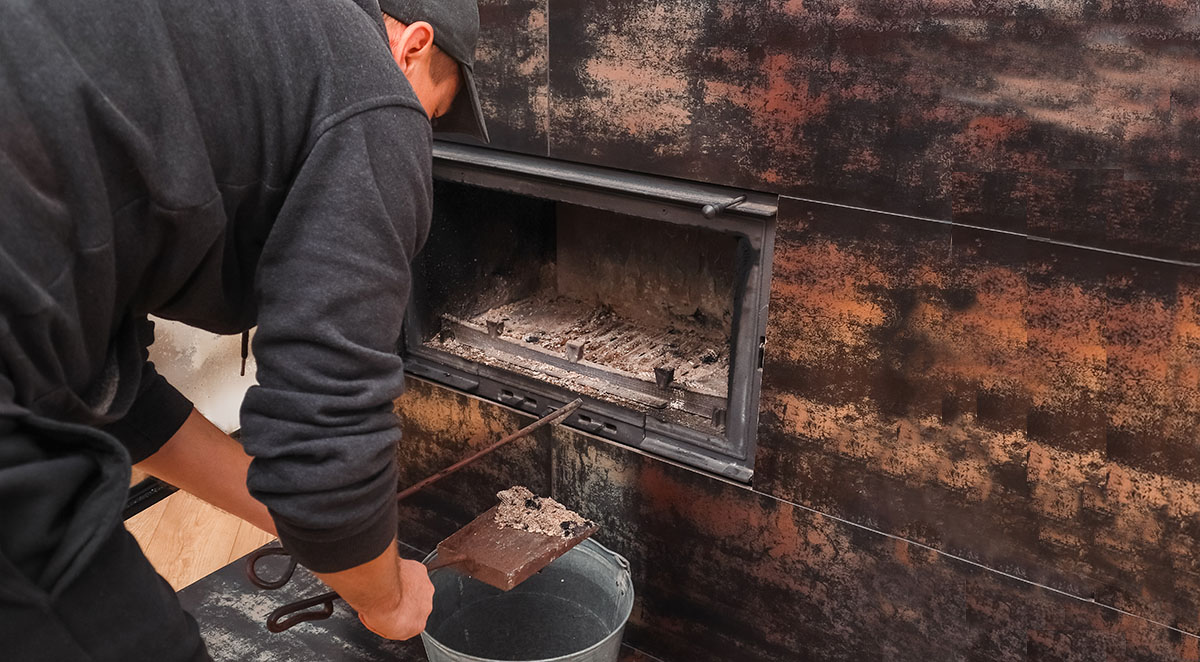
Most people call a chimney company when they want the chimney swept. The sweeping matters, but it is not the main event. The real job is the chimney inspection: a technician looks at the whole system, from the firebox to the top of the chimney, and tells you whether it is safe to burn in. A clean flue with a cracked liner is still a fire risk. A spotless firebox under a failing crown is still letting water into the house.
Appalachian Chimney Service is a chimney and hearth company in Clyde, NC, serving homeowners across Western North Carolina. As we like to say, the job is about 10 percent work and 90 percent education. This post walks through what a chimney inspection includes, how the three NFPA 211 inspection levels differ, when a deeper inspection makes sense, what the technician checks, and what you get when the visit is over.
Quick Summary
- NFPA 211, the national standard for chimneys, fireplaces, vents and solid fuel-burning appliances, calls for an annual chimney inspection.
- The standard sets out three inspection levels. Level 1 covers readily accessible parts. Level 2 adds attics, crawl spaces, basements and a camera scan of the flue. Level 3 opens concealed areas when a hidden hazard is suspected.
- NFPA 211 calls for a Level 2 when the system changes, before a flue is relined, and after a chimney fire or storm damage. The industry also commonly uses a Level 2 when a property is sold or transferred.
- A technician checks the firebox, damper, smoke chamber, flue, connector, crown, cap, flashing and masonry, plus clearances to anything that can burn.
- After the job, Appalachian Chimney Service emails your paperwork and photos so you can see what the technician saw.
- The result is one of three outcomes: keep using it, clean it, or repair it before the next fire.
What a Chimney Inspection Is, and Why NFPA 211 Asks for One Every Year
A chimney inspection is a structured look at the condition of your chimney, flue and connected appliance. The technician confirms that the system is sound, free of deposits and obstructions, and built with the right clearances to combustible materials.
The standard behind it
The National Fire Protection Association publishes NFPA 211, the Standard for Chimneys, Fireplaces, Vents, and Solid Fuel-Burning Appliances. It lists an annual inspection as the baseline for a chimney in regular use. The NFPA's own heating safety guidance gives homeowners the same advice in plain terms: have heating equipment and chimneys cleaned and inspected every year by a qualified professional.
For how a chimney must be built, homes follow the International Residential Code and its chapter on chimneys and vents. NFPA 211 covers how an existing chimney is inspected and maintained. We base every recommendation on these two documents.
Why yearly, even if you barely use it
A chimney can change without a single fire in it. Birds and squirrels nest in open flues. Freeze and thaw cycles crack mortar and crowns. Wind and heavy rain loosen flashing. An annual inspection catches these problems before the first cold night, when you are most likely to light a fire without thinking about it.
Level 1, Level 2, Level 3: What Each One Covers
NFPA 211 defines three levels of inspection. Each level includes everything in the level below it. The right level depends on your situation, not on what someone wants to sell you. You can read how we describe each level on our chimney cleaning and inspection page.
Level 1: annual maintenance
A Level 1 inspection is for a chimney that stays in service under the same conditions, with the same appliance, and no changes. It is the standard yearly inspection and the one done during routine cleaning.
The technician examines the readily accessible parts of the chimney exterior and interior, plus the accessible parts of the appliance and its connection to the chimney. The technician confirms that the flue is free of obstructions and combustible deposits such as creosote. The technician does not remove panels or coverings just to reach hidden areas.
Level 2: detailed assessment
A Level 2 inspection includes everything in a Level 1, then goes further. The technician examines accessible portions of the chimney in attics, crawl spaces and basements, and checks clearances to combustibles wherever those areas can be reached. The technician also checks that the flue is the right size and type for the connected appliance.
A Level 2 includes a video scan of the internal surfaces and joints of the flue liners. A camera on a cable travels up the flue and shows cracks, gaps and deposits that no one can see from the firebox or the roof. A Level 2 does not involve removing or breaking any permanent part of the chimney or the house.
Level 3: comprehensive evaluation
A Level 3 inspection is for concealed areas. It is used when a serious hazard is suspected and a Level 1 or Level 2 cannot fully evaluate it, or when damage from a fire, storm or similar event needs investigation. A Level 3 includes everything in the first two levels plus removal of certain parts of the building or chimney, but only as far as needed to reach the area in question.
When a Level 2 Inspection Is Called For
NFPA 211 and the chimney inspection industry name specific situations where a Level 1 is not enough. In each of these, the common practice is at least a Level 2.
Sale or transfer of a property
NFPA 211 and the inspection industry commonly use a Level 2 inspection when a property is sold or transferred. A new owner has no history on the chimney: when it was last cleaned, whether it had a chimney fire, or whether the liner is intact.
This is a practice and a standard, not a law. Whether a sale contract calls for a Level 2 depends on the buyer, the lender, the agent and the local authority. A buyer, lender or home inspector may ask for one. If you are buying or selling, schedule early so there is time to act on what it finds.
A change to the system
A Level 2 is called for when you add or remove a connected appliance, or replace one with an appliance of a different type, fuel, input rating or efficiency. Converting a wood fireplace to a gas insert is a common example. The flue that worked for the old appliance may be the wrong size or material for the new one. If you plan a new stove or insert, our installation services page shows what we install.
A Level 2 is also called for before a flue is relined or its lining replaced. The technician needs a clear picture of the existing flue before a new liner goes in.
After a chimney fire or a storm
A chimney fire, a building fire, a weather or seismic event, or any other incident likely to have damaged the chimney calls for a Level 2. After a mountain storm, a chimney that took a lightning strike, a fallen limb or high winds deserves a full look before the next fire.
What the Technician Checks, From the Firebox to the Crown
Every chimney is different, but a thorough inspection follows the same path. Here is what our highly trained technicians look at on a typical visit.
Inside the house
- Firebox: cracked or missing firebrick, gaps in mortar joints, and signs of overfiring.
- Damper: whether it opens, closes and seals, and whether it is rusted or warped.
- Smoke chamber: the space above the damper, checked for creosote, cracks and rough surfaces that trap deposits.
- Hearth and surround: cracks, and proper clearance between the fireplace opening and nearby wood trim or mantels.
- Connector or stovepipe: for a stove or insert, the pipe joints, support, pitch, rust and the connection into the chimney.
Inside the flue
- Creosote and soot: how much buildup there is and what kind. Our post on understanding creosote explains the stages.
- Obstructions: nests, leaves, fallen masonry and debris.
- Liner condition: cracks, gaps, missing mortar and shifted tiles, seen on camera during a Level 2.
On the roof
- Crown: the cap of concrete or mortar on top of the chimney, checked for cracks that let water into the masonry.
- Chimney cap and spark screen: missing, rusted or clogged caps.
- Flashing: the metal seal where the chimney meets the roof, a frequent source of leaks.
- Masonry: spalling brick, failing mortar and leaning or separating sections.
Our technicians work from tied-off ladders and carry a cell phone to the roof. We also call ahead with an arrival estimate.
What You Receive, and What Happens Next
After each job, Appalachian Chimney Service emails your paperwork and photos. You can look at the same flue tiles, crown and flashing the technician saw, and keep the record for your files, your insurer or a future buyer.
Three possible outcomes
Every inspection ends in one of three places:
- Keep using it. The system is sound and clean enough to use. You come back next year.
- Clean it. There is buildup that needs to come out before the next fire.
- Repair it. Something needs fixing first. That could be a crown, flashing, a damper, a stovepipe or a liner. Our chimney repair and restoration page covers that work.
We will tell you what is urgent, what can wait, and why. We do not publish prices, because each chimney is different. If you want a written estimate for any repair, contact our office and we will walk you through it.
What You Can Check Yourself, and What You Cannot See From the Floor
A flashlight and a few minutes between visits can catch these signs:
- Black flakes or chunks falling into the firebox.
- A damper that sticks or will not close.
- Smoke rolling into the room instead of going up the flue.
- Water stains on the ceiling or wall near the chimney.
- Brick or mortar pieces on the roof or the ground below the chimney.
What you cannot see is the liner above the smoke chamber, the inside of the chase, the clearances in the attic, or the top of the crown. That is where serious problems hide. If you are getting ready for the burning season, our pre-winter chimney checklist is a good place to start.
Frequently Asked Questions
How often do I need a chimney inspection?
NFPA 211 calls for an inspection once a year for a chimney in use. The NFPA's homeowner guidance says the same thing: clean and inspect heating equipment and chimneys every year. If anything about the system changes, NFPA 211 calls for a Level 2.
Is a chimney inspection the same as a chimney cleaning?
No. A cleaning removes soot and creosote. An inspection checks the condition of the whole system. NFPA 211 calls for a Level 1 inspection during routine cleaning, but the two answer different questions.
Do I need a Level 2 inspection when I buy or sell a house?
NFPA 211 and the inspection industry commonly use a Level 2 when a property is sold or transferred. It is not a law by itself, so whether your contract calls for one depends on the buyer, lender and agent. A buyer or lender may ask for one, and it is the safest choice when you do not know the chimney's history.
What does a video scan show?
A camera passes up the flue and shows cracked or missing tiles, gaps in the joints, deposits and blockages that cannot be seen from the firebox or the roof. Video scanning is part of a Level 2 inspection.
Do gas fireplaces need an inspection?
Yes. Gas appliances still vent combustion gases. The U.S. Consumer Product Safety Commission warns that fuel-burning heating systems, including fireplaces, can cause carbon monoxide poisoning when they have defective or blocked venting systems, and it urges a professional inspection every year. Switching from wood to gas is itself one of the situations that calls for a Level 2.
Where can I get a fireplace inspection in the Asheville area?
Appalachian Chimney Service is based in Clyde and serves Asheville and the surrounding Western North Carolina counties, including Haywood, Buncombe, Jackson and Henderson. Call (828) 400-8731, Monday to Friday, 8 am to 4:30 pm, and we will tell you which inspection level fits your situation.
Schedule Your Chimney Inspection
A chimney that looks fine from the yard can still hide a cracked liner, a failing crown or a nest in the flue. A yearly inspection is the simplest way to know before you light the first fire. Call (828) 400-8731, Monday to Friday, 8 am to 4:30 pm, or request an inspection through our contact page. Our highly trained technicians serve homeowners across Western North Carolina, and we offer group discounts and affordable options for people on fixed incomes.