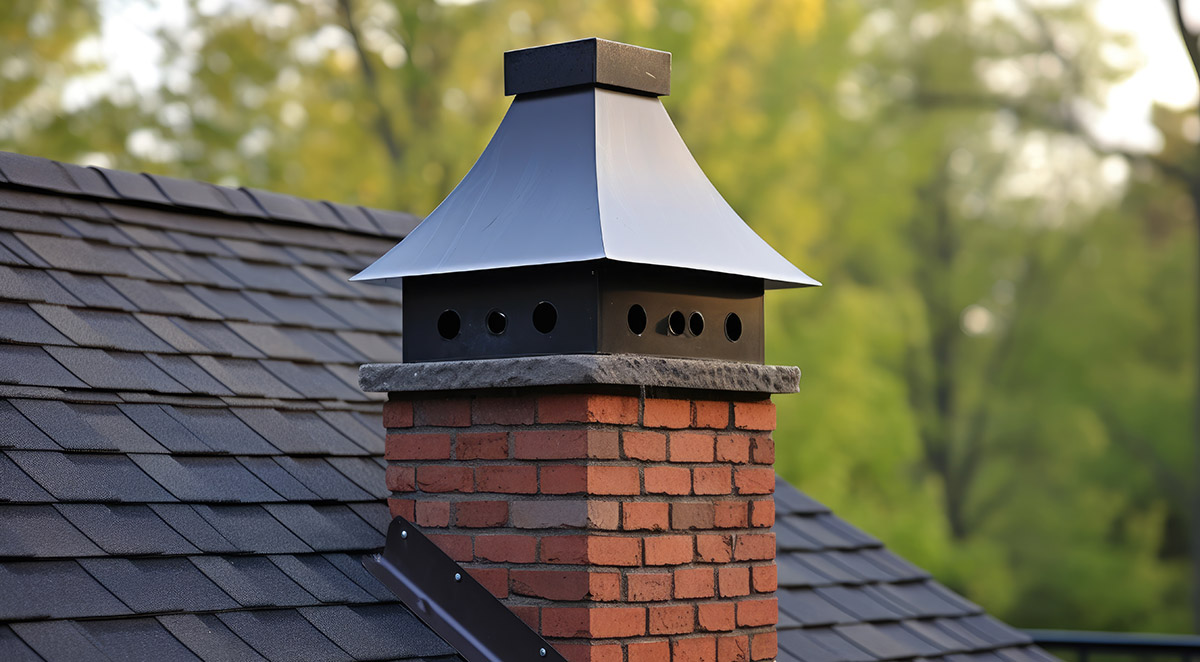
A home’s chimney is an entire system. Every component plays a specific role in keeping your home safe, comfortable, and energy efficient. Among the most important of those components are the chimney cap, the chimney crown, and the damper. When all three are in good condition, your fireplace performs the way it was designed to. When any one of them fails, the consequences can range from cold drafts and rising utility bills to structural water damage and unwanted wildlife guests.
This chimney cap guide covers what each component does, what materials are available, how to spot trouble early, and why professional installation makes the difference.
Quick Summary
- Caps protect the flue opening from rain, animals, sparks, and debris
- Crowns are the concrete top of a masonry chimney and must be properly shaped to shed water
- Dampers control airflow and prevent energy loss when the fireplace is not in use
- All three components require periodic inspection and professional service when damaged
- Custom fabrication ensures the right fit for any chimney configuration
What Each Component Does
Chimney Caps
A chimney cap sits directly over the flue opening at the top of the chimney. It is your system's first line of defense against several serious threats. Without a properly fitted cap, your chimney is exposed to direct rainfall, wind-driven downdrafts, sparks escaping onto your roof, and animals looking for a warm place to nest. Every cap Appalachian Chimney Service installs includes a spark arrestor screen that prevents burning embers from escaping while keeping wildlife out.
Chimney Crowns
The chimney crown is the concrete surface that seals the top of a masonry chimney, spanning from the flue liner to the outer edge of the structure. A properly built crown slopes slightly downward and overhangs the chimney so rainwater drains away from the masonry rather than soaking into it. In Western North Carolina, the freeze/thaw cycle puts crowns under significant stress each winter. Water enters small cracks, freezes, expands, and widens those cracks with every cold snap until the crown can no longer protect the chimney below it.
Dampers
The damper is the movable plate that controls airflow between the firebox and the flue. Open it when you have a fire going and it creates the draft that draws smoke up and out. Close it when the fireplace is not in use and it forms a barrier against heat loss, cold air infiltration, and outdoor pests. A damper that does not seal properly is essentially an open hole in your home's thermal envelope.
Materials, Styles, and Options
Cap Materials and Configurations
The material you choose for a chimney cap affects both its longevity and its appearance. The main options are:
- Stainless steel: Highly durable and corrosion-resistant, making it a practical long-term choice for mountain climates
- Copper: Exceptional longevity with a distinctive patina that develops over time, popular for homes where curb appeal matters
- Galvanized steel: A more economical entry point, though less suited to high-moisture environments over the long term
Cap configurations include single-flue caps for standard residential chimneys, multi-flue caps that cover multiple flue tiles while also protecting the crown, and top-mounted damper caps that combine cap and damper function in a single unit.
Damper Types
Throat dampers are the traditional design, positioned just above the firebox opening. They are typically cast iron and pivot open or closed. They work well when properly maintained, but they are susceptible to rust and warping over time.
Top-mounted dampers are installed at the very top of the flue and controlled by a cable that runs down to the firebox. They seal the chimney from the top, which eliminates the column of cold air that sits above a throat damper in the flue. They also function as a cap, offering dual protection in one unit. For homeowners dealing with energy loss, downdraft problems, or persistent animal intrusion, upgrading to a top-mounted damper is often one of the most cost-effective improvements available.
Signs of Damage or Failure
Knowing what to watch for can save you from a much larger repair bill down the road. Here are the key warning signs for each component.
Cap Warning Signs
- Water appearing inside the firebox after rain
- Animal sounds, nest materials, or debris in the firebox
- Visible rust, bent mesh, or a cap that has shifted out of position
- Smoke or spark blowback during windy conditions
Crown Damage Indicators
- Visible cracks across the crown surface, even hairline fractures
- Concrete or masonry debris around the chimney base
- Water stains or white mineral deposits (efflorescence) near the top of the chimney exterior
- Water entering the chimney despite a functioning cap
Damper Replacement Warning Signs
- Difficulty opening or closing the damper
- Visible rust or corrosion on the plate
- Warping that prevents a full seal
- Smoke entering the room during a fire
- Noticeable drafts or cold air from the fireplace when not in use
- Unexplained increases in heating or cooling bills
If you are noticing any of these, a professional inspection is the right first step. Our chimney cleaning and inspection service provides thorough documentation and clear recommendations so you know exactly what your chimney needs.
Energy Savings and Wildlife Protection
A damper that does not close completely is quietly costing you money every month. Conditioned air escapes up the flue year-round, in winter carrying heated air out and in summer letting cool air follow the same path. Top-mounted dampers create a tighter seal at the flue opening and eliminate that standing column of cold chimney air, which is why homeowners who upgrade from an aging throat damper often notice a meaningful improvement in comfort and efficiency.
Wildlife protection is equally important, particularly in Western North Carolina where birds, squirrels, and raccoons regularly seek out chimneys as nesting sites. Chimney swifts, a federally protected migratory species, cannot be removed once they have nested. A properly fitted cap with a spark arrestor screen closes off the flue to wildlife entirely, preventing the nesting blockages and fire hazards that come with animal intrusion. For a broader look at what a neglected chimney can cost you, our post on the hidden dangers of a dirty chimney is worth reading.
Custom Design Options
Not every chimney is the same shape, and not every homeowner wants a stock solution on their roofline. Appalachian Chimney Service operates an in-house metal shop that allows us to custom fabricate caps, chase covers, and decorative shrouds to fit any chimney configuration precisely. Our process:
- Measure the exact flue dimensions to ensure a perfect fit
- Select materials based on your durability needs and aesthetic preferences
- Fabricate the component on-site at our metal shop
- Install with proper attachment methods designed to withstand mountain weather conditions
Custom options include copper and stainless steel caps in any configuration, decorative shrouds that add architectural interest while concealing the functional hardware, and chase covers for prefabricated chimneys built to replace rust-prone factory units. Visit our custom metal fabrication page to learn more about what our shop can produce.
Frequently Asked Questions
How do I know what size cap I need?
Cap sizing is based on the exact dimensions of the flue tile at the top of your chimney. Professional measurement is the most reliable approach, particularly for multi-flue chimneys or non-standard configurations. An undersized cap allows wind-driven rain to enter; an oversized cap can reduce draft performance.
Can a cracked crown be repaired, or does it need full replacement?
It depends on the extent of the damage. Minor surface cracking can often be addressed with crown sealing or a flexible waterproof crown coating applied over the existing surface. Significant structural cracking typically requires full crown rebuilding using properly formulated concrete, correct overhang dimensions, and expansion joints to prevent future cracking. A professional assessment is the most reliable way to determine which approach is appropriate.
How long do chimney caps typically last?
Copper caps can last 50 years or more. Stainless steel caps typically provide 20-plus years of reliable service. Galvanized steel caps have a shorter lifespan in humid environments. Proper installation and annual inspection contribute significantly to how long any cap performs.
Is a top-mounted damper worth the upgrade from a throat damper?
For most homeowners, yes. Top-mounted dampers provide a tighter seal, better energy efficiency, and dual function as a cap. They are particularly beneficial in homes with older or corroded throat dampers, persistent downdraft problems, or recurring animal intrusion issues.
How often should these components be inspected?
All three should be part of an annual chimney inspection. In Western North Carolina's climate, crowns in particular can sustain new freeze/thaw damage from one season to the next even if they appeared sound in a prior inspection.
Conclusion
Caps, crowns, and dampers each play a distinct role in the performance and longevity of your chimney system. When they are functioning well, your fireplace is safe, efficient, and protected from the elements. When they are not, the costs compound quickly. Annual inspection and prompt attention to warning signs are the most reliable ways to stay ahead of problems.
The highly trained technicians at Appalachian Chimney Service are ready to assess every component of your chimney and provide honest, documented recommendations. Contact us to schedule your inspection or to ask about custom cap fabrication and damper replacement options for your home.