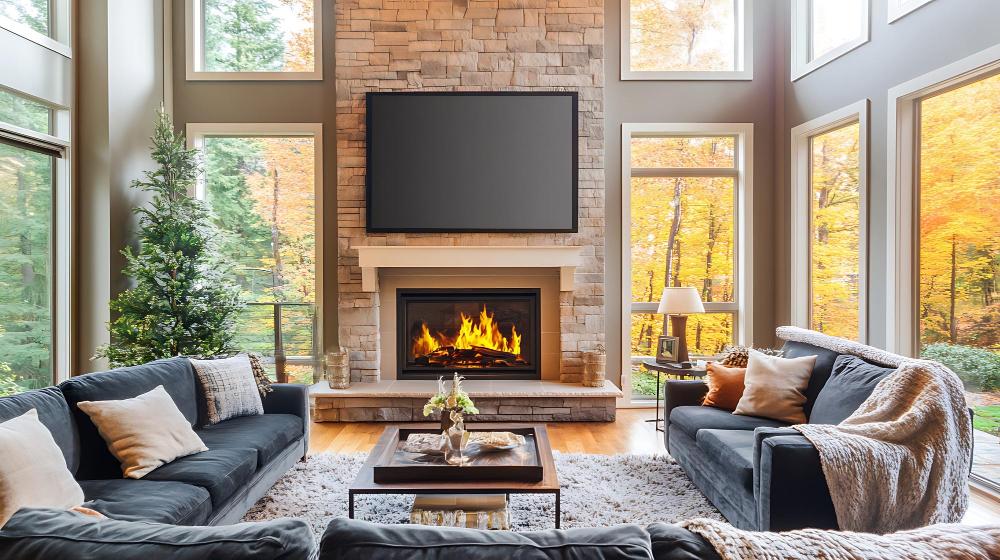
 Enjoy the comfort and convenience of a professionally installed and maintained gas fireplace system. At Appalachian Chimney Service, our highly trained technicians provide comprehensive gas fireplace services throughout Western North Carolina, ensuring safe, efficient, and beautiful heating solutions for your mountain home.
Whether you're looking to convert an existing wood fireplace, install a new gas system, or maintain your current gas fireplace, our team delivers expert service based on IRC and NFPA-211 standards—what we consider our professional "bible" for all chimney and fireplace work.
Why Choose Gas Fireplaces in Mountain Settings
The unique climate and lifestyle of mountain living make gas fireplaces an ideal heating solution for homes throughout the region. Here's why so many homeowners are choosing gas:
Instant Comfort When You Need It
- Immediate heat at the flip of a switch or press of a remote button
- Consistent warmth without temperature fluctuations
- Zonal heating that reduces whole-house heating costs
- No waiting for wood to catch fire on cold mountain mornings
Perfect for Mountain Weather Patterns
- Reliable operation during power outages with battery backup options
- Consistent performance regardless of wood availability or storage constraints
- Weather-independent functionality during wet or stormy conditions
- Altitude-appropriate models designed specifically for mountain installations
Low-Maintenance Luxury
- No wood to split, stack, or haul into your home
- No ash cleanup after enjoying your fire
- No creosote buildup requiring regular chimney sweeping
- Reduced allergens compared to traditional wood-burning systems
Aesthetic Versatility
- Wide range of styles from traditional to ultra-modern
- Various installation options to suit your specific space
- Customizable flame appearance and ember beds
- Multiple facing materials to complement any décor
Comprehensive Gas Fireplace Services
Our experienced team provides end-to-end gas fireplace solutions, ensuring your system operates safely and efficiently for years to come.
Professional Installation Services
Our gas fireplace installation process prioritizes safety, efficiency, and aesthetics:
- Thorough consultation to determine your heating needs and style preferences
- Detailed site evaluation to identify the optimal installation location
- Comprehensive proposal with clear options and pricing
- Professional installation by our highly trained technicians
- Proper venting configuration according to manufacturer specifications
- Gas line installation or modification in compliance with local codes
- Thorough testing of all components and safety features
- Complete system demonstration and operational training
Whether you're converting an existing wood fireplace to gas or installing a completely new system, our installation team provides the highest standards of safety and performance.
Conversion from Wood to Gas
Transform your traditional wood-burning fireplace into a convenient, clean-burning gas system:
- Inspection of existing fireplace to ensure proper conversion compatibility
- Chimney liner evaluation and installation if needed
- Gas line installation by qualified professionals
- Log set or insert installation with attention to aesthetic detail
- Ventilation system configuration for maximum efficiency and safety
- Complete testing and operational instruction
Gas Fireplace Maintenance
Regular maintenance is essential for safe and efficient operation. Our maintenance services include:
- Annual safety inspections of all gas components
- Burner cleaning and adjustment for optimal flame pattern
- Pilot assembly cleaning and testing
- Thermocouple/thermopile testing and replacement when necessary
- Glass panel cleaning to maintain visibility and heat transfer
- Log positioning verification for proper appearance and function
- Ventilation system inspection and cleaning
- Carbon monoxide detector testing for your family's safety
Comprehensive Repair Services
When your gas fireplace isn't functioning correctly, our team provides expert diagnosis and repair:
- Troubleshooting of ignition problems
- Gas valve repair or replacement
- Remote control system diagnostics and repair
- Blower motor service
- Glass replacement for damaged units
- Ventilation system correction
- Gas line leak detection and repair
- Thermostat calibration and replacement
If you notice signs that your fireplace needs maintenance, it's essential to schedule a professional inspection. At Appalachian Chimney Service, we can help you troubleshoot and repair gas fireplaces, ventilation and more. For more information, check out our pre-winter checklist for fireplaces and chimneys.
Gas Log Options and Features
We offer a variety of gas log options to suit any aesthetic preference and heating requirement.
Vented Gas Log Systems
Vented gas logs are designed to be installed in an existing wood-burning fireplace with a functioning chimney:
- Realistic flame patterns that closely resemble a traditional wood fire
- Greater flame height and visual appeal
- Various log styles including split oak, birch, walnut, and more
- Ember bed options for enhanced realism
- Hand-painted details for authentic wood appearance
- Multi-burner configurations for more impressive flame displays
Vent-Free Gas Log Systems
Vent-free (ventless) systems offer flexibility in installation locations:
- Higher heating efficiency with 99% of heat remaining in the room
- Installation versatility without requiring a chimney
- Oxygen depletion sensors for safety
- Lower installation cost in many applications
- Reduced exterior modifications to your home
- Suitable for zone heating in specific areas
Gas Fireplace Inserts
For a more efficient and integrated solution, gas inserts transform existing fireplaces:
- Self-contained units that fit into existing fireplaces
- Sealed combustion chambers for maximum efficiency
- Blower systems to distribute heat throughout your space
- Thermostat controls for consistent temperature management
- Modern safety features including automatic shut-off
- Various facing options to match your home's style
Check out our gas fireplace options here.
Advanced Features Available
Modern gas fireplace systems offer impressive technological enhancements:
- Remote control operation including flame height adjustment
- Programmable thermostats for scheduled operation
- Smart home integration with compatible systems
- Battery backup functionality during power outages
- Multi-sided viewing options for open-concept spaces
- Adjustable accent lighting to enhance the display
- Variable BTU output for precise heating control
Efficiency and Environmental Benefits
Gas fireplace systems offer significant advantages in both energy efficiency and environmental impact compared to traditional wood-burning options.
Energy Efficiency Advantages
- Precise heat control allows for optimized energy use
- Zone heating capability reduces whole-house heating costs
- High-efficiency models with ratings up to 85%
- No heat loss through an open chimney when not in use
- Programmable operation to heat only when needed
- Consistent fuel delivery without performance variables
Environmental Benefits
- Lower particulate emissions compared to wood-burning fireplaces
- Reduced carbon monoxide production
- No deforestation concerns associated with firewood
- Clean-burning technology in modern gas systems
- No creosote production or related environmental hazards
- Reduced ash waste requiring disposal
Cost Benefits Over Time
Converting to gas offers long-term financial advantages:
- Elimination of firewood expenses
- Reduced chimney cleaning costs
- Lower home insurance rates in many cases
- Increased home value with modern heating amenities
- Extended lifespan compared to traditional wood-burning units
- Decreased maintenance requirements and associated costs
Expert Gas Fireplace Services Throughout the Mountain Region
Appalachian Chimney Service proudly serves homeowners across Western North Carolina, providing professional gas fireplace services in:
- Asheville and surrounding communities
- Waynesville, Clyde and Haywood County
- Hendersonville and Henderson County
- Bryson City, Sylva and Swain County
- Cashiers, Highlands and Jackson County
- Cherokee and surrounding areas
- Maggie Valley and mountain resort communities
- Canton and rural mountain areas
Our service area covers the diverse mountain communities throughout the region, ensuring that all homeowners have access to professional gas fireplace expertise regardless of location.
Frequently Asked Questions About Gas Fireplaces
How safe are gas fireplaces compared to wood-burning models?
Gas fireplaces are generally considered safer than wood-burning alternatives. They eliminate risks associated with sparks, creosote buildup, and chimney fires. Modern gas fireplaces include safety features such as oxygen depletion sensors, automatic shut-off valves, and sealed combustion chambers. However, professional installation and regular maintenance are essential to ensure all safety systems function correctly.
Do gas fireplaces provide real heat or are they mostly decorative?
Gas fireplaces provide significant heat output and can be effective heating appliances, not just decorative features. Heat output is measured in BTUs (British Thermal Units), with most residential models ranging from 20,000 to 60,000 BTUs. Direct-vent and vent-free models are especially efficient at heating, often warming spaces of 1,000-2,000 square feet. Many units include blowers to distribute heat more effectively throughout your space.
How often should I schedule maintenance for my gas fireplace?
Annual maintenance is recommended for all gas fireplace systems. Professional inspection ensures safe operation, identifies potential issues before they become dangerous or expensive, and maintains manufacturer warranty requirements. Homes with gas fireplaces used as primary heat sources or those operated more than three times weekly during the heating season may benefit from bi-annual maintenance.
Can a gas fireplace be installed anywhere in my home?
While gas fireplaces offer more installation flexibility than wood-burning units, they must still adhere to specific placement guidelines. Direct-vent models require exterior wall access for ventilation, while vent-free units have restrictions regarding room size and installation location. All installations must comply with local building codes, manufacturer specifications, and clearance requirements. A professional site evaluation is necessary to determine feasible installation locations.
What's the difference between vented and vent-free gas logs?
Vented gas logs must be installed in a working fireplace with an operational chimney or vent system. They produce more realistic flames but send approximately 75-85% of their heat up the chimney. Vent-free (ventless) logs don't require a chimney and retain nearly 100% of their heat in the room, but have more restricted flame appearance and must include oxygen depletion sensors. Vent-free systems are not permitted in all jurisdictions due to local building codes.
How long do gas fireplaces typically last?
With proper maintenance, a quality gas fireplace can last 15-25 years. Individual components may require replacement during this time, with items like thermocouples typically needing replacement every 3-5 years depending on use. The burner assembly generally lasts 10-15 years, while the firebox itself has the longest lifespan. Regular professional maintenance significantly extends the operational life of all components.
Will a gas fireplace work during a power outage?
Many gas fireplaces can operate during power outages, though functionality may be limited. Basic models with standing pilot ignition systems typically work without electricity. Units with electronic ignition may include battery backup systems that maintain essential functions. However, blowers, remote features, and some advanced controls will not function without power. During installation, we can discuss backup options if power outage operation is important for your needs.
Are gas fireplaces expensive to operate?
Gas fireplaces are generally economical to operate compared to other heating options. Average operating costs range from $0.40 to $0.65 per hour based on current natural gas prices in Western North Carolina. Propane units typically cost slightly more to operate. The exact cost depends on local utility rates, the fireplace's BTU rating, and how frequently you use the system. Zone heating with a gas fireplace often reduces overall home heating costs by allowing lower temperatures in unused areas.
Can I convert my existing wood fireplace to gas without major construction?
Yes, most traditional wood-burning fireplaces can be converted to gas without major structural modifications. Conversion options include gas log sets installed in the existing firebox or more efficient gas inserts that fit within the current fireplace opening. The process typically requires gas line installation, possible venting modifications, and electrical work for blowers or electronic features. Our professionals can assess your current fireplace to determine the most appropriate conversion method.
Experience the Comfort and Convenience of a Professional Gas Fireplace System
Appalachian Chimney Service brings decades of experience to every gas fireplace installation, maintenance, and repair project. Our educational approach ensures you understand not just what we're doing, but why it's important for the safety, efficiency, and longevity of your system.
Contact us today to schedule a consultation and discover the perfect gas fireplace solution for your needs. Our team serves homeowners throughout Western North Carolina with professional gas fireplace services you can trust.